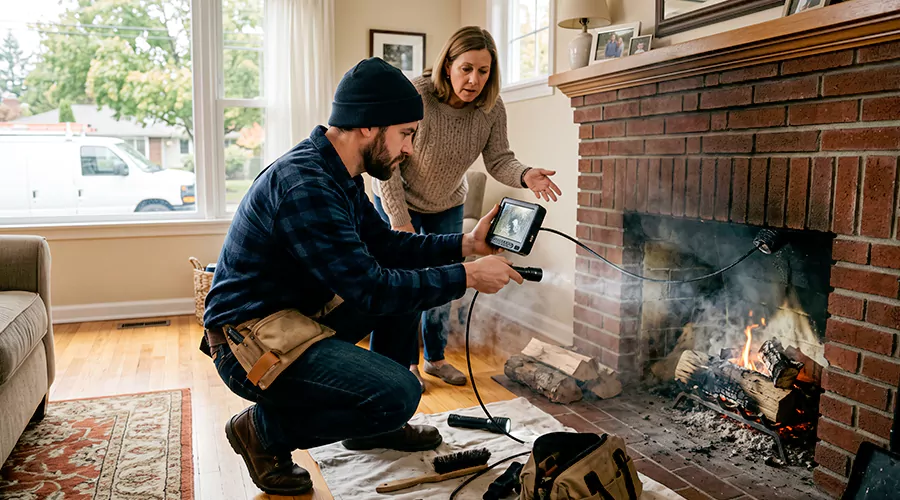
Why Is My Fireplace Not Drawing Properly?
Determine why your fireplace is not drawing properly, including chimney blockages, poor draft, inadequate airflow, chimney height, and negative indoor pressure.




Based on 500+ Reviews

Proudly American
Owned & Operated

A fireplace that is not drawing properly can cause smoke to enter the room, weak flames, unpleasant odors, and poor heating performance. A properly functioning fireplace should create enough draft to pull smoke and gases upward through the chimney and release them outside the home.
When a fireplace does not draw correctly, the problem is usually related to airflow, chimney conditions, ventilation, or fireplace design. In some cases, issues within the smoke chamber can also affect how efficiently smoke moves into the chimney, making fireplace smoke chamber repair necessary to restore proper draft. Identifying the cause of poor draft is important because continued smoke problems can affect comfort and may indicate a chimney issue that needs attention.
Fireplace draft is the movement of air that allows a fire to burn and moves smoke through the chimney.
The draft process works because:
When this airflow is weak or interrupted, the fireplace may not draw properly.
Common signs of poor fireplace draft include:
These signs usually indicate an airflow problem somewhere in the fireplace or chimney system.
Several issues can prevent a fireplace from drawing properly.
Common causes include:
A blockage inside the chimney can prevent smoke from escaping properly.
Common chimney blockages include:
When the chimney passage is restricted, smoke has difficulty moving upward and may come back into the room.
A chimney inspection can help identify hidden blockages.
Creosote forms when smoke particles from burning wood stick to the inside of the chimney.
Over time, buildup can:
Heavy creosote buildup may also create:
Regular chimney cleaning helps maintain proper airflow.
The damper controls airflow between the fireplace and chimney.
If the damper is:
smoke may not be able to exit properly.
Before starting a fire:
A cold chimney may have weak draft when a fire is first started.
This can happen when:
Cold air can prevent warm smoke from rising.
Starting with a smaller fire can help warm the chimney and improve airflow.
A fireplace requires oxygen to burn properly.
Homes with tight construction may not allow enough replacement air to enter.
Signs of poor air supply include:
Possible solutions include:
Negative air pressure occurs when more air leaves the home than enters.
Common causes include:
When negative pressure occurs, air may be pulled down through the chimney instead of moving upward.
This can cause:
Chimney height affects how well a chimney creates natural draft.
A chimney that is too short may not generate enough upward airflow.
Possible results include:
In some situations, increasing chimney height may improve draft performance.
The chimney and fireplace must be properly matched.
A flue that is too small may:
A flue that is too large may:
Incorrect sizing may require professional evaluation.
Weather conditions can interfere with fireplace draft.
Strong winds can push air downward through the chimney.
Factors that may contribute include:
A properly designed chimney cap may help reduce some wind-related draft problems.
Firewood quality affects fireplace performance.
Wet wood produces:
A cooler fire creates weaker upward airflow, which can make draft problems worse.
Using dry, seasoned firewood helps produce stronger heat and better chimney draft.
Some draft problems are related to the design of the fireplace system.
Possible issues include:
Design-related problems may require professional evaluation to correct.
The correct solution depends on the cause of the problem.
Ways to improve fireplace draft include:
Removing:
can restore airflow.
Make sure it opens fully and operates correctly.
Provide enough replacement air for proper combustion.
Allow the chimney to warm before building a large fire.
Dry wood creates hotter fires and stronger draft.
Fix damaged:
Yes. A chimney cap can affect airflow if it is:
A properly installed chimney cap should protect the chimney without restricting airflow.
A chimney fan or draft inducer may help some fireplaces with ongoing draft problems.
It may be useful when:
However, the underlying problem should be identified before adding mechanical assistance.
Professional chimney inspection may be needed when:
A professional can inspect the chimney, flue, and ventilation system to identify the cause.
Regular maintenance helps maintain proper fireplace airflow.
Helpful steps include:
Preventive maintenance can help avoid recurring draft issues.
A fireplace that does not draw properly is usually caused by airflow problems, chimney blockages, poor ventilation, incorrect sizing, or damaged chimney components. Common causes include creosote buildup, cold chimneys, closed dampers, negative air pressure, and insufficient air supply. Finding the cause of poor draft is important because it helps restore fireplace performance and prevent ongoing smoke problems. Regular chimney inspections, proper cleaning, and maintaining good airflow can help keep a fireplace operating efficiently and safely.
Common causes include chimney blockages, creosote buildup, poor ventilation, closed dampers, and weak chimney draft.
Cleaning the chimney, checking the damper, improving air supply, using dry firewood, and fixing chimney issues can improve draft.
Yes. Creosote and debris buildup can restrict airflow and reduce chimney performance.
Smoke may return because of poor draft, chimney blockages, negative air pressure, or ventilation problems.
Yes. Chimney height plays an important role in creating natural upward airflow.
If smoke is entering the room repeatedly, it is best to identify and correct the cause before continued use.
Determine why your fireplace is not drawing properly, including chimney blockages, poor draft, inadequate airflow, chimney height, and negative indoor pressure.
